Business
How Did the Vikings Get Here?
By Marcus Chen
Advertisement · Why this ad?
Katherine oversees editorial operations across all six brands. Before joining The Meridan Group, she spent 14 years at the Minneapolis Star Tribune, where she led the metro desk through its digital transformation. She holds a Master's in Journalism from Northwestern's Medill School.
More from Katherine →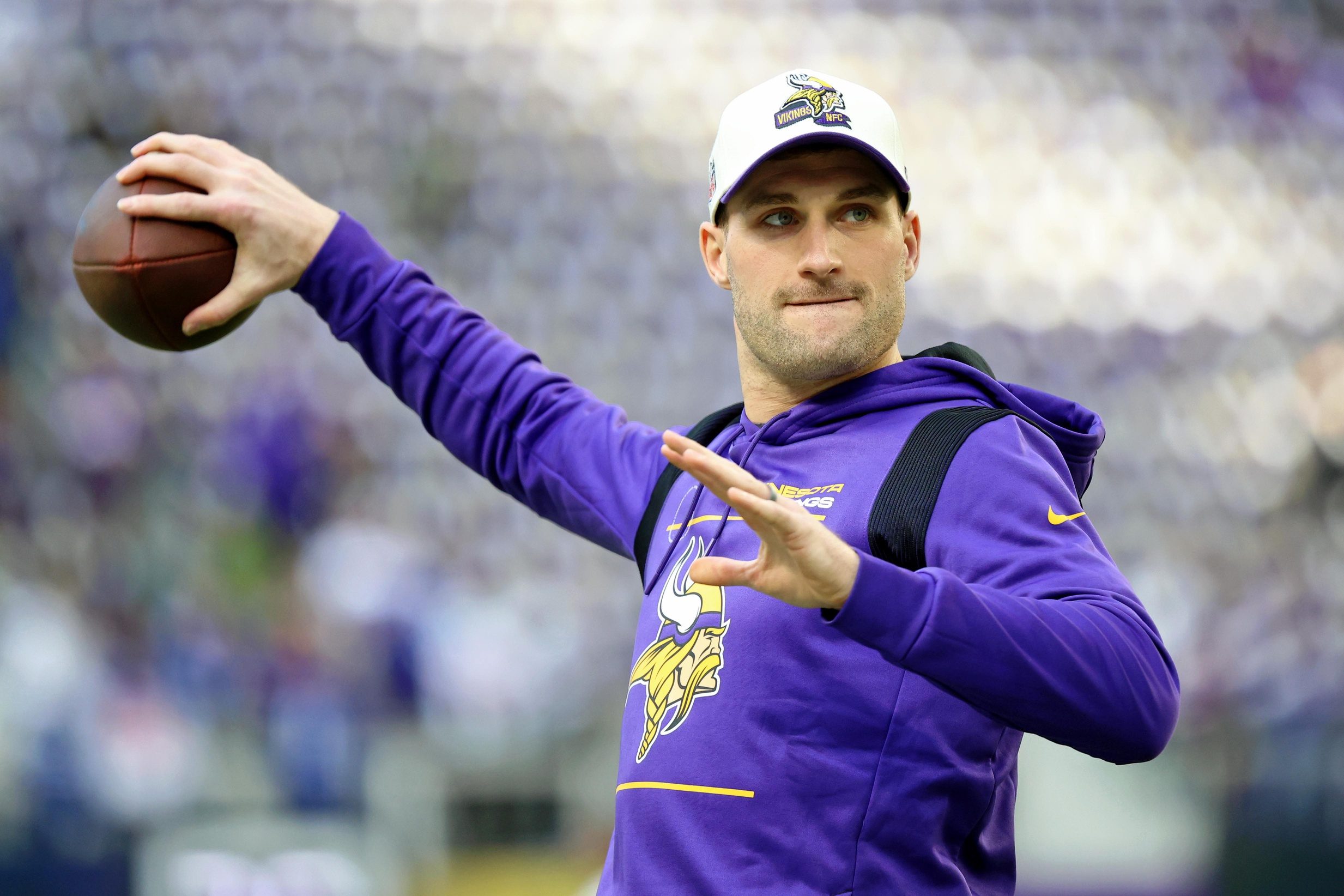
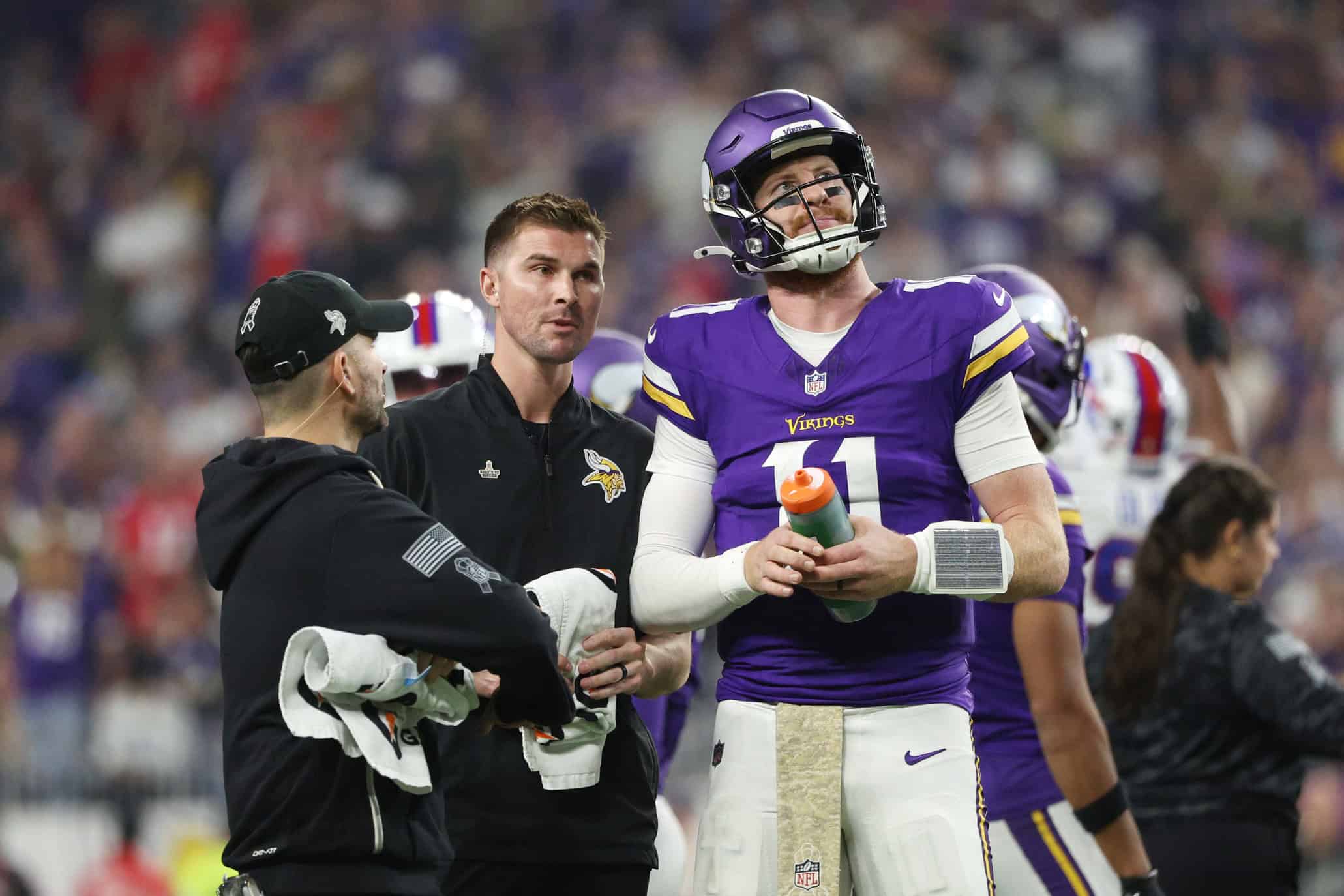
As a hater of Kirk Cousins, I could feel this day coming. The Minnesota Vikings’ plan for a Cousins succession blew up so spectacularly that the only appropriate punishment was for Cousins to reclaim the spot. For years, Vikings fans have grappled with the perception of Cousins as ‘good, not great,’ a quarterback capable of strong performances but consistently falling short of championship aspirations. The team’s efforts to move on and find their franchise signal-caller – first through Sam Darnold and then through a draft-day gamble on J.J. McCarthy – have yielded disappointing results, culminating in a Monday night debacle that made bringing back Cousins feel almost inevitable.
Twitter announcement (via @adamschefter, @rapsheet, @mikegarafolo)
Even as a hater, I get the move. The Vikings’ quarterback carousel has been dizzying: Sam Darnold, once seen as a potential savior after his time with the Jets, proved inconsistent and ultimately unable to lead the offense. Kyler Murray, acquired in the hopes of injecting dynamism and a fresh perspective, struggled with injuries and failed to command the team effectively. And J.J. McCarthy, the highly-touted rookie drafted with an eye toward the future, was quickly deemed not ready for prime time and traded away just weeks later. The team desperately needed a quarterback, and the urgency of the situation outweighed concerns about revisiting a familiar, yet often frustrating, chapter in Vikings history.
No, this trade is like the rest of the Vikings season: It’s all about Brian Flores. The arrival of Flores as defensive coordinator two years ago signaled a dramatic shift in the Vikings’ identity. He brought with him a reputation as a relentless innovator and a master of aggressive blitzing schemes – a stark contrast to the more conservative approaches of previous defensive coordinators. His impact has been undeniable; the Vikings defense is currently among the league’s elite, consistently harassing opposing quarterbacks and forcing turnovers. However, that defensive brilliance has been repeatedly undermined by an offense unable to sustain drives or capitalize on scoring opportunities.
Monday night’s scoreboard says the Buffalo Bills beat the Minnesota Vikings easily. It was anything but. Minnesota’s defense was challenged by Josh Allen and responded by treating the former MVP the same way they did Caleb Williams and Jared Goff earlier this year. Allen was sacked four times, threw a pick, and nearly had two more turnovers, including an overturned fumble that would have given the Vikings the ball at the one-yard line. This defensive performance underscored just how much potential the team possesses, but also highlighted the stark reality: a dominant defense can only carry a team so far without a functional offense.
Did Josh Allen fumble here? The rule on the field was Vikings recovered the fumble, but the play is under review.
The Vikings’ offensive struggles aren’t merely anecdotal; they are reflected in the stark statistics. The team has struggled to control the clock, with drives often lasting less than two minutes. They’ve relied heavily on penalties to move the chains, a sign of a stagnant and predictable attack. This offensive inefficiency has placed an immense burden on the defense, forcing them to consistently save games in high-pressure situations.
The Vikings defense is historic, and not just for their groundbreaking blitz rate. Minnesota is allowing just 14.5 points per game, better than all but five teams in the past two decades. Those squads include the 2013 Seattle Seahawks and 2008 Pittsburgh Steelers, two Super Bowl winners. The disparity between the defense’s performance and the offense’s struggles is jarring, prompting a sense of frustration among fans and raising serious questions about the team’s ability to contend for a championship.
All they need is some semblance of offense that Flores can drag, kicking and screaming, over the line. Over the last two weeks, against two six-plus-win teams, Murray and Wentz each showed that they aren’t even up to playing at even Nick Foles’ level. The trade for Cousins isn't a sign of faith in his transformative potential; it’s a pragmatic move driven by the immediate need for stability and experience. While Cousins has never been considered a true franchise quarterback, capable of carrying a team to a Super Bowl victory, he represents a known quantity – a player familiar with the Vikings’ system and capable of managing the game effectively.
Cousins’ ceiling is limited, which Vikings fans know firsthand. He lost in the Divisional Round in 2019, when he had a top-five scoring defense led by Mike Zimmer. His previous tenure in Minnesota was marked by moments of brilliance but also by frustrating playoff shortcomings. The hope now is that pairing him with Flores’ dominant defense provides a more balanced and competitive team.
The bet that Nolan Teasley is making isn’t that Cousins can be something he never was. It’s a bet that Flores has the goods to deliver a championship with someone who’s the equivalent of Foles, Trent Dilfer, or, to draw from Vikings history, Case Keenum. The narrative surrounding quarterbacks like Foles and Keenum – players who defied expectations and led their teams to unexpected success – offers a glimmer of hope for Cousins’ return.
There are small value-adds to Cousins, of course. Knowing Minnesota’s offense gives him a head start over most other options, and for all his faults, Cousins knew how to get the ball to Justin Jefferson. Jefferson’s frustration has been palpable this season, as he’s struggled to find consistent opportunities in the offense. Cousins' familiarity with Jefferson's skillset could provide an immediate boost to the passing game and alleviate some of the receiver's pent-up frustration.
But for the most part, Minnesota’s new quarterback having “COUSINS” on his back is the least important part of having Kirk Cousins. The Vikings needed a life raft, and they grabbed one that isn’t really distinguishable from Daniel Jones, Geno Smith, or Joe Flacco. That doesn’t matter. What does is whether he’s distinguishable from Murray or Wentz. We’ll get our answer soon.
Several questions remain unanswered. Will this move ultimately hinder the development of younger players? Can Flores truly unlock Cousins’ potential, or are we simply witnessing a return to the familiar limitations of the past? And perhaps most importantly, does this trade represent a genuine push for a championship, or is it merely a stopgap measure delaying the inevitable search for a true franchise quarterback? The community should closely monitor the Vikings’ performance in the coming weeks, paying particular attention to how Cousins integrates with the offense and whether he can effectively manage the team’s expectations. The trade deadline isn't an ending; it's a crucial turning point that will shape the trajectory of the Vikings’ season and beyond.
By Marcus Chen

By Katherine Langford
By Katherine Langford

By Katherine Langford