Technology
US stocks turn unsteady following last week’s sell-off, but oil prices fall sharply
By Katherine Langford
Advertisement · Why this ad?
Marcus manages the day-to-day editorial workflow across all brands, coordinating coverage assignments and ensuring editorial standards are met. He previously served as city editor at the Pioneer Press and holds a degree in Political Science from Carleton College.
More from Marcus →As the sun rose over Minneapolis on a brisk November morning, traders began to breathe a sigh of relief. After weeks of uncertainty and volatility, the U.S. stock market showed signs of recovery, buoyed by a sharp decline in oil prices. Investors, weary from last week’s sell-off, found hope in the numbers flashing across electronic boards, signaling that perhaps stability was on the horizon.
On Monday, November 2, 2026, the U.S. stock market rebounded, with the S&P 500 climbing 0.6%, recovering some of the losses from its third consecutive week of decline. The Dow Jones Industrial Average surged by 539 points, or 1%, while the Nasdaq composite rose by 0.7%. This uptick came as oil prices fell sharply, with Brent crude dropping 7.4% to $105.03 per barrel.
The fluctuations in oil prices have been a rollercoaster ride, with the cost swinging between $70 and $120 per barrel since the onset of the ongoing war with Iran. This uncertainty has impacted not only the oil market but also the broader economy, as businesses and consumers alike grapple with the implications of rising fuel costs.
The tech sector, particularly companies involved in artificial intelligence, has been under scrutiny. Concerns have mounted over whether the substantial investments in AI data centers will yield the expected returns. This skepticism has contributed to a shaky performance for tech stocks, which had previously surged to record highs.
Alphabet, Google's parent company, experienced a notable rebound, rising 1.3% after suffering a historic drop of over 12% just days prior. The company’s latest profit reports revealed troubling signs, including a decline in free cash flow and slower-than-anticipated growth in its core search business. These developments have raised questions about the sustainability of AI-driven growth.
Despite the challenges facing the tech sector, several companies outside of AI reported stronger-than-expected profits, contributing to the market's overall recovery. Marriott International, for example, saw its stock rise by 4.7%, buoyed by robust performance in its global hotel operations. CEO Anthony Capuano noted that even in regions impacted by the war, such as the Middle East, business trends had improved significantly.
Idexx Laboratories also made headlines, with its stock soaring by 19.4% after the company reported better-than-expected profit and revenue figures. The firm, which provides diagnostic equipment and products to veterinarians, raised its forecasts for the full year, signaling confidence in its ongoing operations.
The recovery in the stock market coincided with positive economic indicators. A report released on the same day indicated that U.S. manufacturing growth exceeded economists' expectations, a promising sign for the economy’s resilience despite ongoing challenges, including high inflation and interest rates.
Moreover, a measure of inflation from the Institute for Supply Management suggested that price increases were occurring at a slower pace, providing further optimism for investors. As the economy continues to chug along, expectations remain high for companies across various sectors to deliver substantial profits.
The decline in oil prices had a direct positive impact on airlines and other companies with significant fuel expenses. United Airlines saw its stock rise by 6.5%, while Southwest Airlines and cruise operator Carnival also experienced gains of 4.4% and 5.5%, respectively. This uptick reflects how lower fuel costs can enhance profitability for these companies, which have been grappling with rising operational expenses.
However, not all sectors shared in the optimism. Marvell Technology faced a significant setback, with its shares dropping 7.3% after announcing a deal to acquire Lumentum, a company specializing in lasers and products for AI infrastructure. Marvell’s decision to exchange 4.5 of its shares for each Lumentum share, valuing the deal at approximately $115 billion, has raised eyebrows among investors.
As the stock market begins to stabilize, all eyes will be on the upcoming profit report from Apple, which is scheduled to be released after trading ends for the day. Apple has been a major player in the tech sector, and its performance could significantly influence market sentiment moving forward.
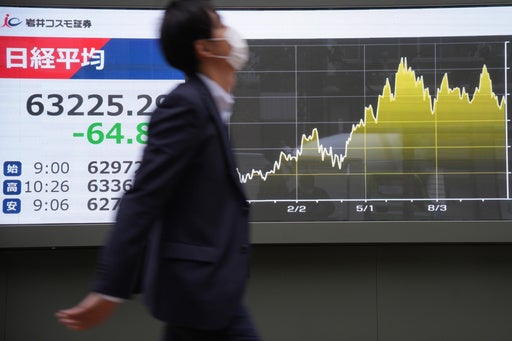
Globally, stock markets also reflected a positive trend. European indexes rose, and in Asia, South Korea's Kospi jumped 2.2%, signaling renewed strength among its tech giants. Meanwhile, the People’s Bank of China announced plans to deploy around 100 billion yuan ($15 billion) to support its market, a move that could further stabilize global economic conditions.
For residents of Minneapolis, the fluctuations in the stock market may seem distant, yet they carry significant implications for the local economy. The Twin Cities are home to a diverse array of businesses, from tech startups to established corporations. The performance of major companies like Apple and Alphabet can have ripple effects on local firms that rely on their technologies and innovations.
Moreover, the health of the stock market often correlates with consumer confidence. When stocks rise, consumers are more likely to spend, which can boost local businesses, including restaurants, retail stores, and service providers. For instance, Minneapolis-based companies like Target and Best Buy are closely tied to consumer spending patterns influenced by broader market trends.
Community leaders are also keeping a close eye on these developments. The Minneapolis Chamber of Commerce has been vocal about the need for businesses to remain adaptable in the face of economic changes. They emphasize the importance of fostering a resilient local economy that can withstand global shocks, such as fluctuations in oil prices or geopolitical tensions.
Local business owners and residents have expressed mixed feelings about the stock market's recovery. For some, like the owner of a popular local café, the rise in stock prices brings hope for increased foot traffic and sales. “When people feel secure about their investments, they tend to spend more,” she remarked. “We’ve been through a tough time, and any sign of recovery is encouraging.”
On the other hand, some residents remain cautious. A financial advisor in the area pointed out that while the market may be rebounding, underlying issues such as inflation and supply chain disruptions still pose risks. “It’s great to see the market recover, but we need to remember that the economy is complex, and we can’t ignore the challenges that still exist,” he noted.
As Minneapolis residents watch these developments unfold, the recovery of the stock market serves as a reminder of the interconnectedness of global economies and the impact of geopolitical events on everyday life. The resilience shown by various sectors, particularly in the face of adversity, underscores the importance of commitment and stability — principles that resonate deeply within our community.
By Katherine Langford
By Katherine Langford

By Marcus Chen

By Marcus Chen